Skip to content
recaplica

    One moment: security check

    Cloudflare wants to make sure you're not a robot. Tick the box below and your search will continue on its own.

    IT
    recaplica SPID: Italy's Digital Identity System, What It Is and How to Get It
    © 2026 Recaplica · recaplica.com — All rights reserved
    Home › Civics

    SPID: Italy's Digital Identity System, What It Is and How to Get It

    By Recaplica Newsroom · Updated on September 20, 2026

    What to print

    Page numbers appear when printing with default margins.

    Slides

    Choose a cut

    Flash10 slidesThe essential thread, to present in classFull16 slidesEvery chapter and the deeper detail

    Both come with speaker notes.

    Telegram channel
    recaplica Clear in 30 seconds, yours in 10 minutes.
    In 30 seconds Key points Figures Deep dive Slides Myths Mind map Quiz Flashcards FAQ

    In 30 seconds quick read

    SPID is Italy's Public Digital Identity System: a single set of credentials that gives access to Italian government services online, to some services in other European Union countries, and to private companies that have adopted it as a login option. It is overseen by AgID, the Agency for Digital Italy, together with the Department for Digital Transformation, but the identities themselves are issued by accredited private providers that a user picks when signing up. There are three security levels, chosen by the service being accessed, and several ways to prove your identity for the first time, including through Italy's electronic ID card. Using SPID is free for citizens, though the credentials expire and need renewing.

    Key Points

    • SPID is a single username-and-password credential for logging into Italian government services online, some EU services, and private companies that accept it.
    • AgID, together with the Department for Digital Transformation, oversees the system; accredited private companies called Identity Providers actually issue the credentials.
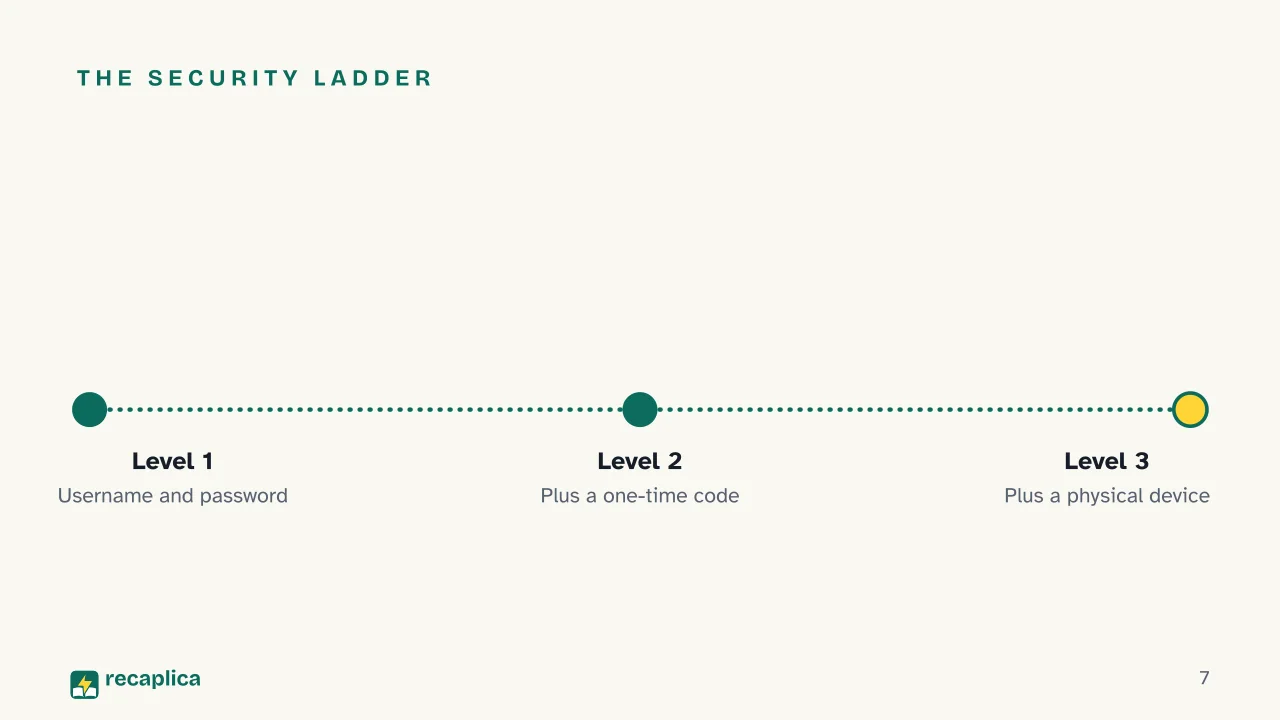
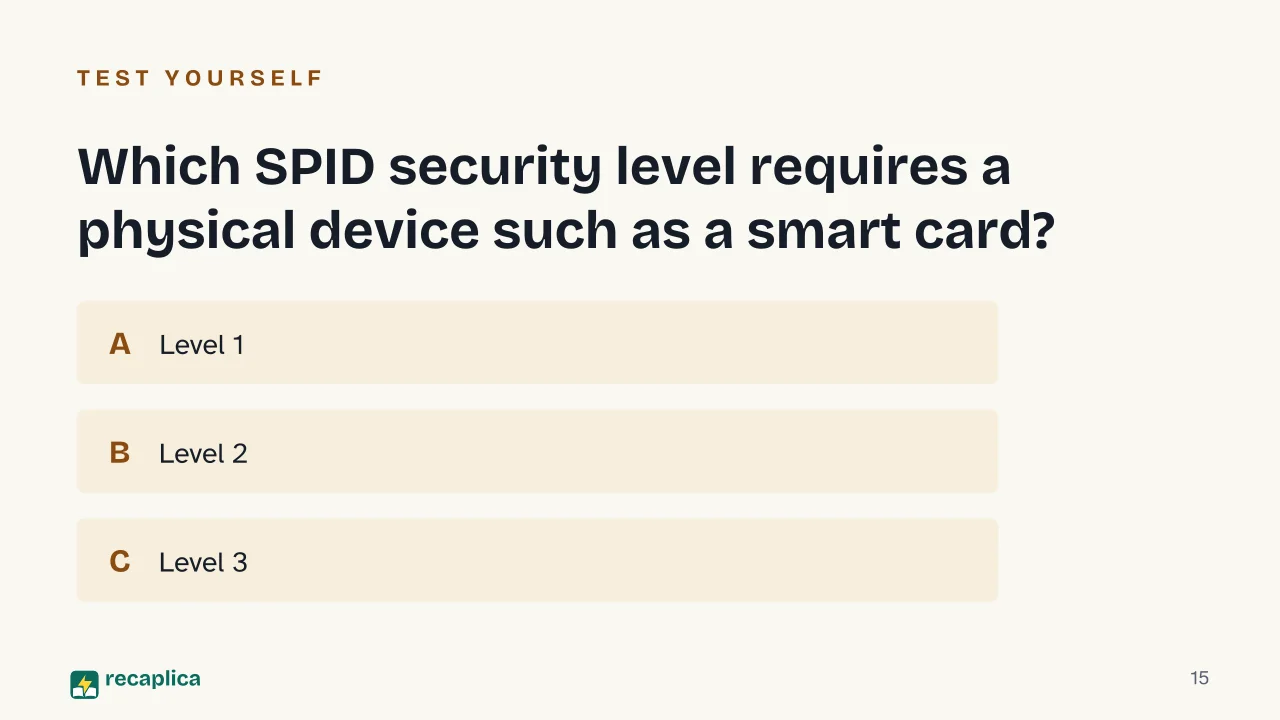
    • There are three security levels: the first with a username and password, the second with an added one-time code, the third with a physical device such as a smart card.
    • To sign up you need to be 18, hold a valid Italian ID document, have a health card or tax code, and provide an email address and mobile number.
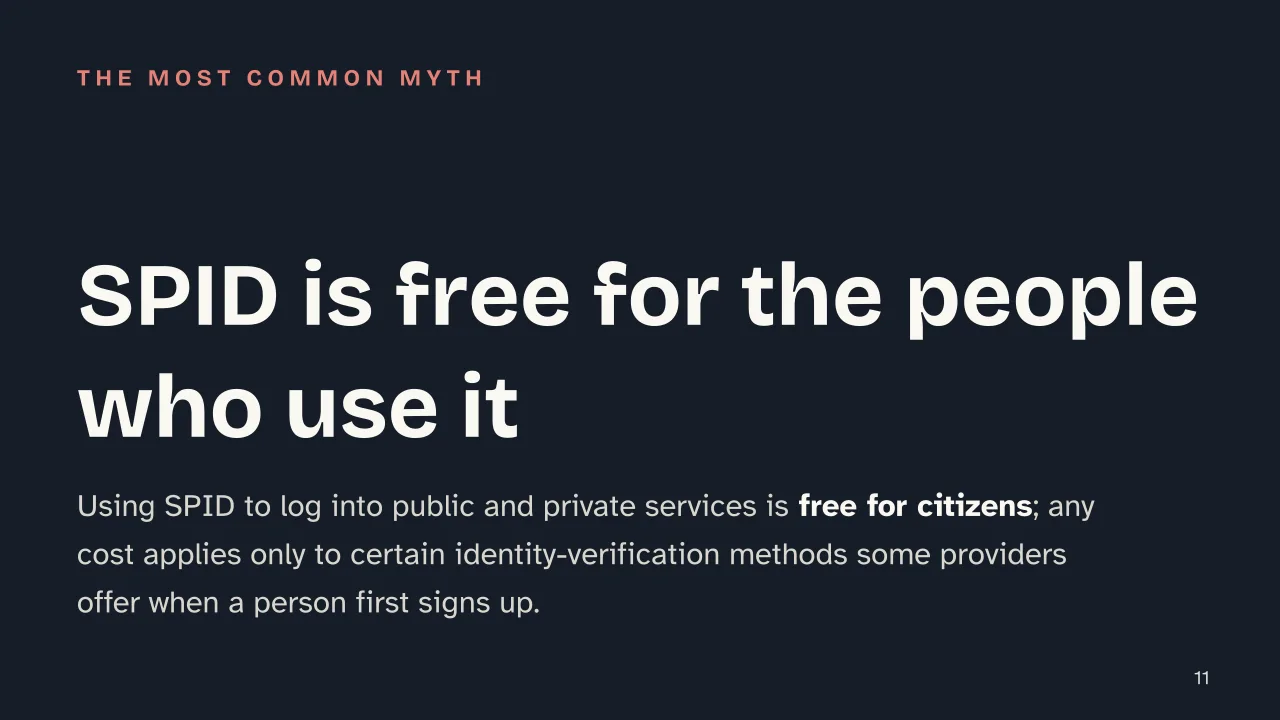
    • Using SPID to access services is free for citizens; any cost applies only to certain identity-verification methods offered by some providers.
    • Credentials expire and must be renewed; the exact terms depend on the provider chosen.

    Key figures

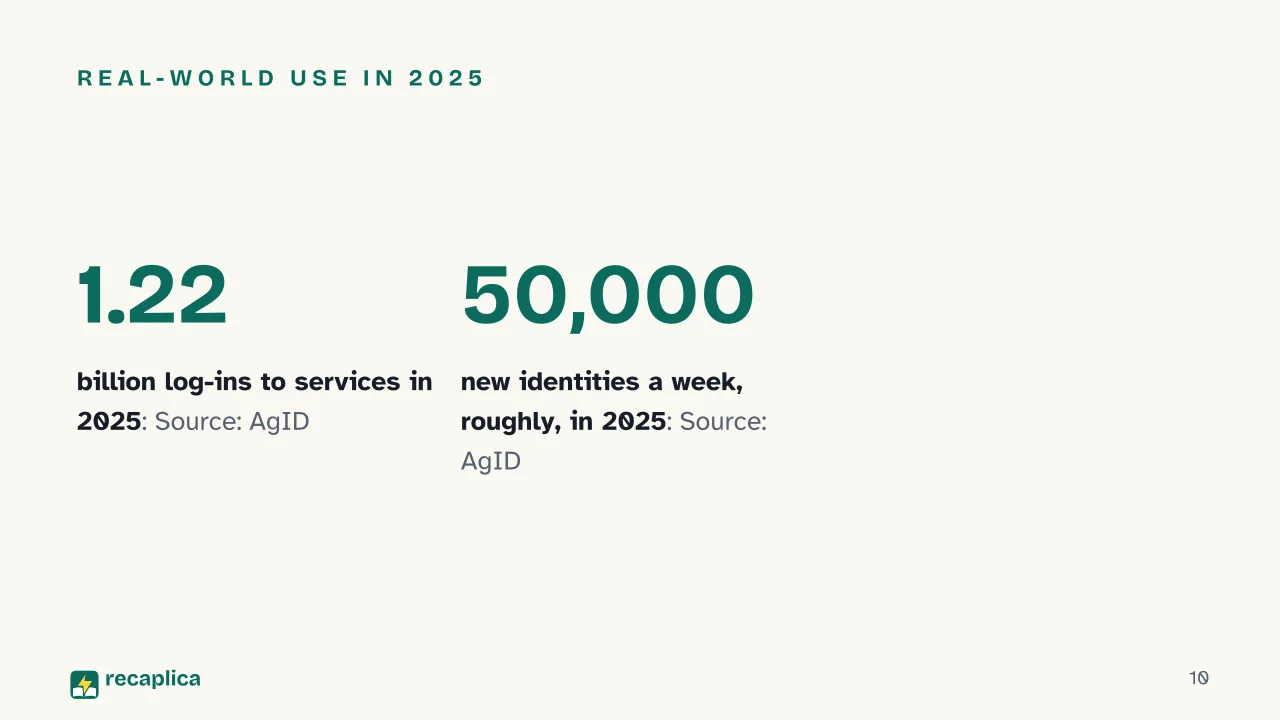
    • 1.22 billion log-ins to public and private services made with SPID in 2025 Source: AgID
    • about 50,000 new SPID identities issued on average each week in 2025 Source: AgID

    Deep Dive

    What SPID is and who runs it

    According to spid.gov.it, Italy’s Public Digital Identity System is the key to logging into services run by local and national government bodies: one single username-and-password pair, in place of the different credentials every Italian government website used to require separately. SPID also opens the digital public services of other European Union countries, and it works with businesses and merchants that have chosen it as a login method for their own online services — the same underlying idea behind identification on the internet more broadly, where a single set of credentials can open more than one door.

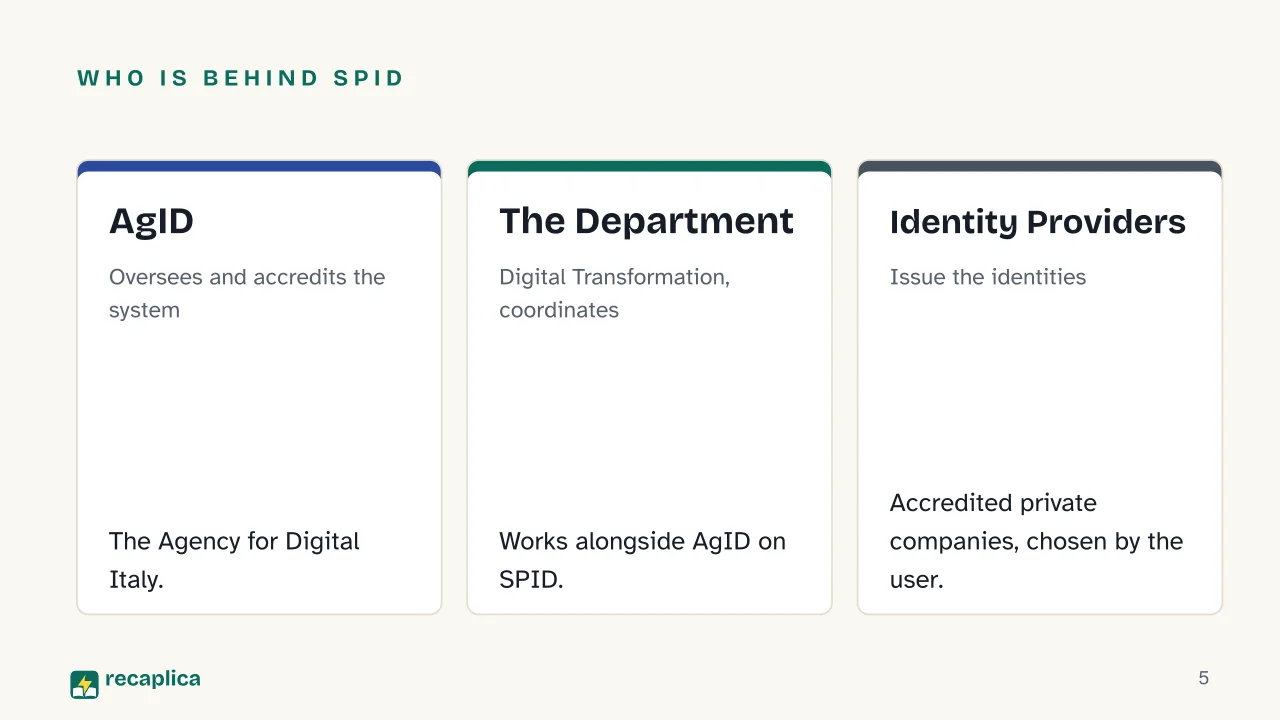
    The system is run by AgID, the Agency for Digital Italy, together with the Department for Digital Transformation. The identities themselves, though, are not issued directly by the state: several accredited digital identity providers, called Identity Providers, are accredited by AgID, and a user picks one of them when signing up.

    The three security levels

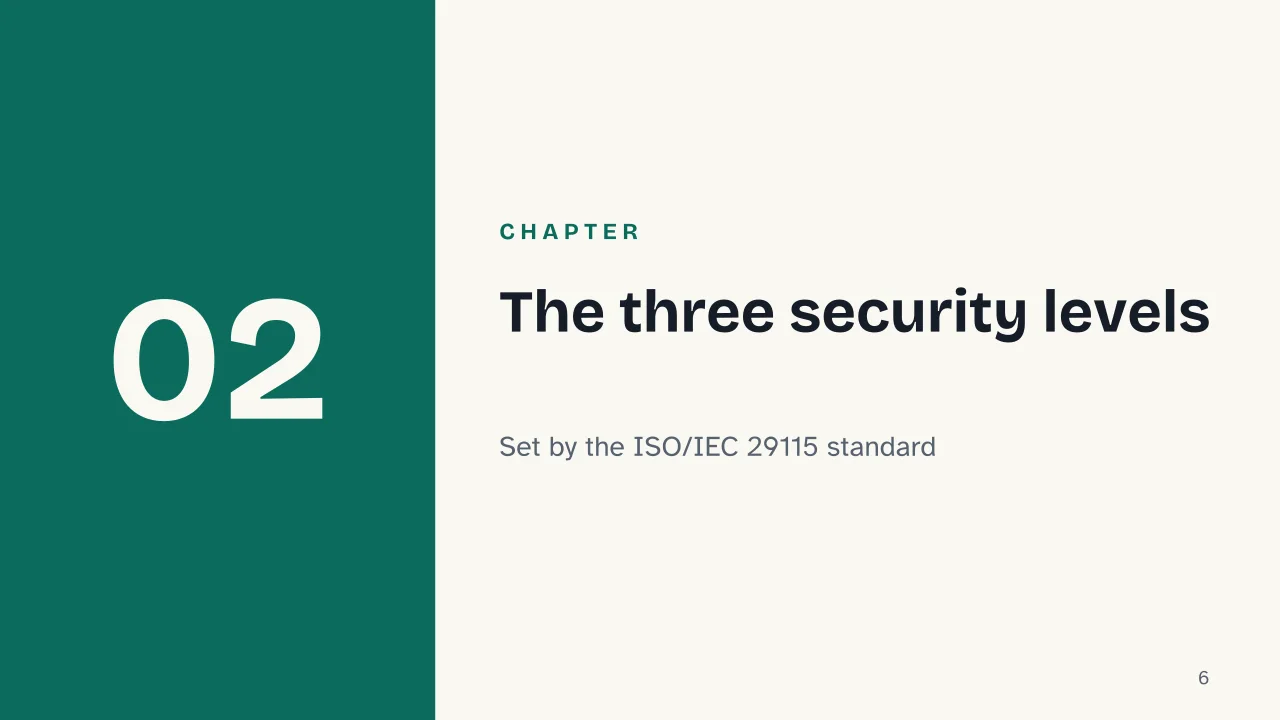
    The three SPID levels follow the ISO/IEC 29115 standard, and the level required for a given service is decided by the public or private body offering it, based on the kind of data involved.

    LevelHow you log inWhat it adds
    Level 1A username and password chosen by the userNothing further
    Level 2Username and passwordA one-time code (one-time password) sent by SMS or an app
    Level 3Username and passwordA physical device holding cryptographic keys: a smart card or a remote digital-signature device (HSM)

    What you need to sign up

    To activate SPID you need to be 18, hold a valid Italian ID document (identity card, driving licence or passport), a health card — or a tax-code card, or a tax-code certificate — an email address and a mobile phone number.

    A practical example: someone logging into Italy’s INPS social-security portal for the first time to check their contribution record needs SPID at least at level 2: they gather their ID document and health card, choose a provider, complete identity verification, and receive a username and password plus the one-time-code mechanism.

    How identity verification works

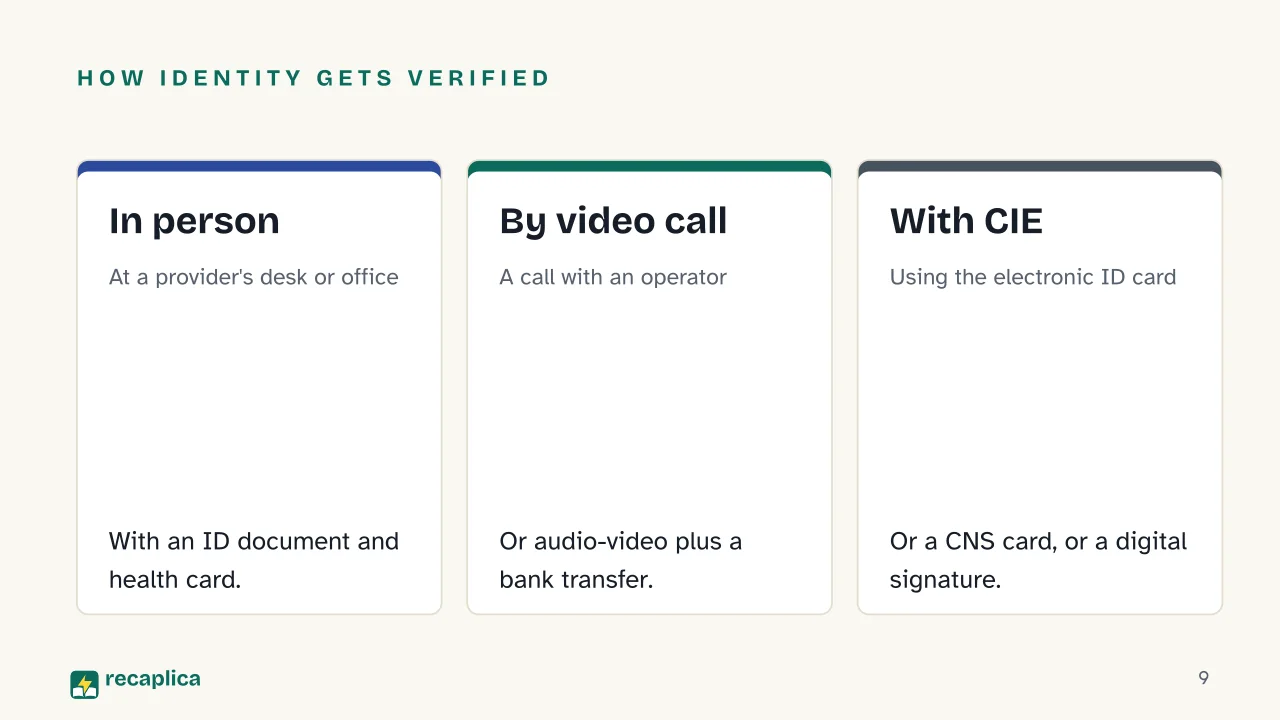
    To prove who you are the first time, spid.gov.it lists several routes: in person at a desk run by the chosen provider, by video call with an operator, through an audio-video procedure paired with a bank transfer, or by using an electronic ID card, a national services card, or a digital signature the person already holds. Once active, the same SPID account can also enable digitally signing documents — a separate service, with its own rules.

    People who focus on digital rights also look at the flip side of a single identity that gives access to everything: the more central one credential system becomes, the more it matters who handles that data and under what safeguards, a question that comes up in areas like mass surveillance and human rights.

    SPID with CIE

    One of the identity-verification methods is “SPID with CIE”: a person uses their own electronic ID card to be verified by the chosen provider and receive SPID credentials. This is different from using the CIE directly to log into a service through the “Login with CIE” option: in that case no SPID is being activated at all, it is a separate credential system belonging to the CIE itself (see the comparison between the two further down).

    SPID is free

    Using SPID to log into Italian government services and private services is free for citizens, according to spid.gov.it. Any cost applies only to the identity-verification procedures needed to sign up, which — depending on the provider chosen — can be free or paid for: it is worth comparing providers’ terms before picking one, rather than assuming a free option does not exist.

    Renewing the credentials

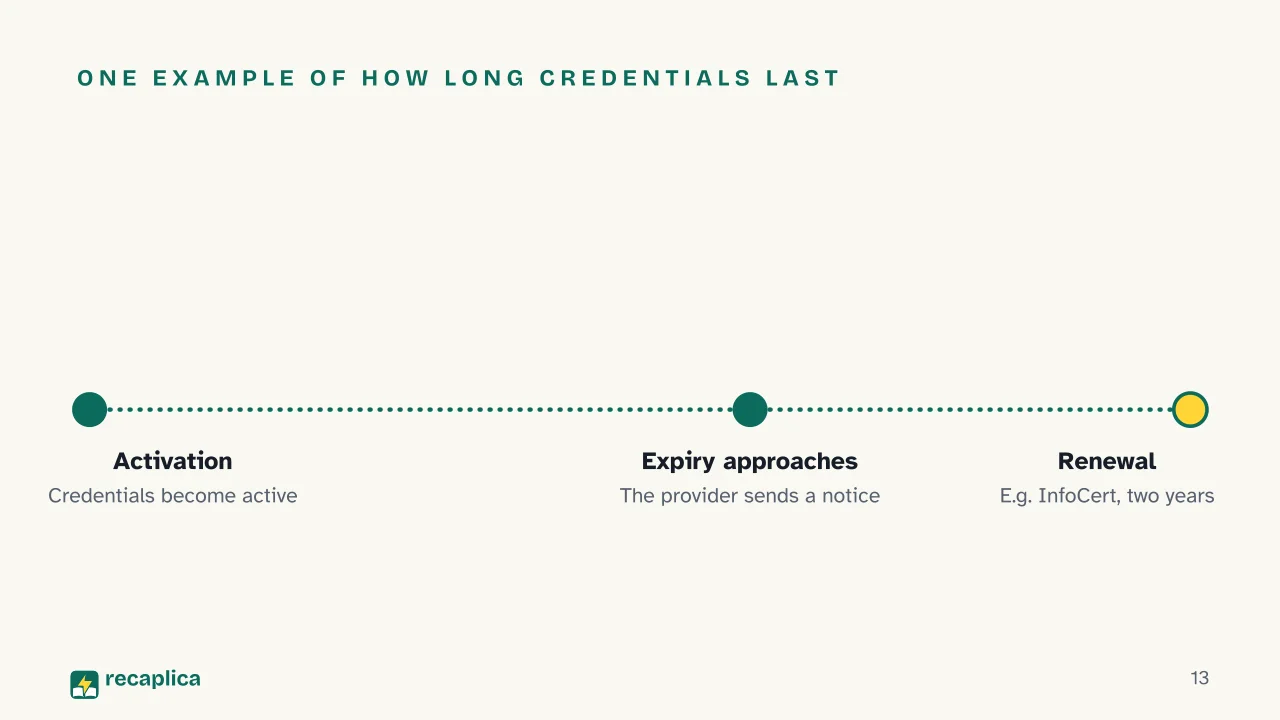
    SPID credentials expire. An accredited provider such as InfoCert, for example, lists a two-year validity for personal-use credentials, renewable free of charge before expiry, while professional-use accounts last twelve months with no automatic renewal at all. This is the practice of one provider, not a general rule set by AgID: the exact terms of any SPID account should always be checked in the account area of the provider it was activated with.

    How it works when logging into a service

    Once active, SPID is used by choosing “Login with SPID” on the website or app of the desired service: the user is redirected to their provider’s page, enters their username and password and, if the service requires it, the second or third security factor. SPID’s cross-border recognition is a concrete case of how the European Union works: it lets an Italian citizen use national credentials to reach certain digital services in another member state.

    SPID and CIE, two separate systems

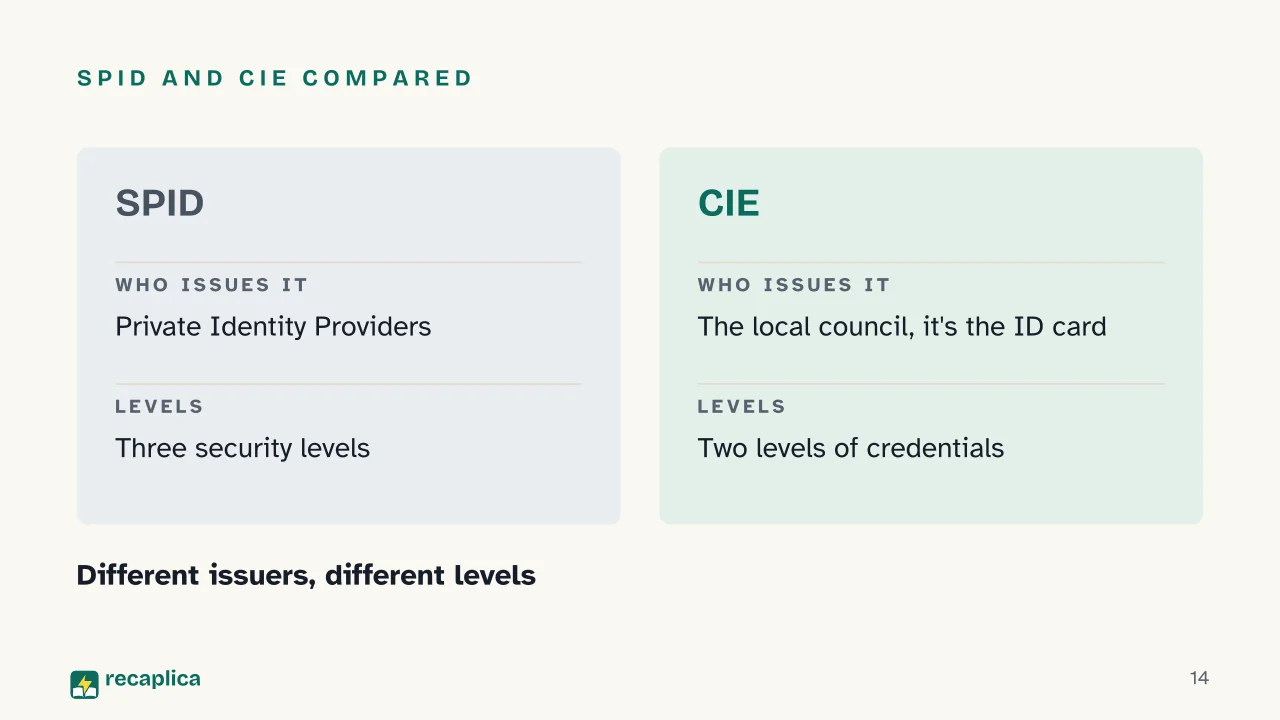
    SPID and Italy’s electronic ID card are often confused, but they are two different systems. According to the official portal of the Ministry of the Interior, the CIE is “the only physical and digital identity certified by the Italian State”: it gives access to government services through “Login with CIE” and allows electronic document signing, with its own two levels of credentials. SPID, by contrast, is a digital identity issued on request by an accredited private provider, with three security levels. Someone who already holds a CIE can use it either directly to log into services or as a verification method to activate SPID: either way, the two remain separate tools, each with its own rules — one example of how the rules governing access to public services connect with the rights and duties set out in the Italian Constitution.

    Slide deck

    Slides ready to download and make your own in PowerPoint or Google Slides, with speaker notes. Pick the Flash cut or the Full one.
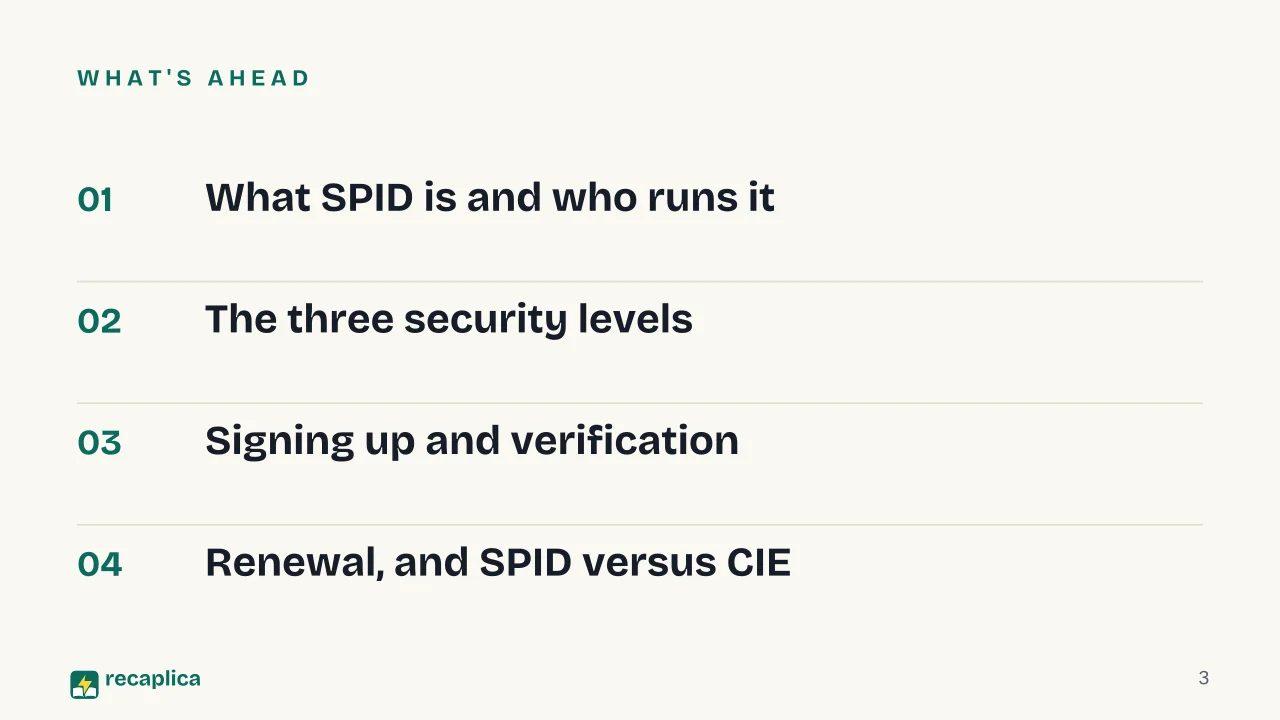
    Slide 1 of the presentation on SPID: SPIDSlide 2 of the presentation on SPID: Does every public service need its own login?Slide 3 of the presentation on SPID: What's aheadSlide 4 of the presentation on SPID: Chapter 01: What SPID is and who runs itSlide 5 of the presentation on SPID: Who is behind SPID: AgID, The Department, Identity ProvidersSlide 6 of the presentation on SPID: Chapter 02: The three security levelsSlide 7 of the presentation on SPID: The security ladderSlide 8 of the presentation on SPID: Chapter 03: Signing up and verificationSlide 9 of the presentation on SPID: How identity gets verified: In person, By video call, With CIESlide 10 of the presentation on SPID: Real-world use in 2025Slide 11 of the presentation on SPID: SPID is free for the people who use itSlide 12 of the presentation on SPID: Chapter 04: Renewal, and SPID versus CIESlide 13 of the presentation on SPID: One example of how long credentials lastSlide 14 of the presentation on SPID: SPID and CIE comparedSlide 15 of the presentation on SPID: Which SPID security level requires a physical device such as a smart card?Slide 16 of the presentation on SPID: The full Recap
    Flash10 slidesThe essential thread, to present in classFull16 slidesEvery chapter and the deeper detail

    Common myths

    • ✗ Myth SPID costs money to use.

      ✓ Reality Many people assume there is a fee for using SPID, but spid.gov.it states that logging into Italian public-sector and private online services with SPID is free for citizens. Any cost that does exist applies only to certain identity-verification methods some providers offer at sign-up, not to everyday use of the credential.

    • ✗ Myth SPID and Italy's electronic ID card are the same thing.

      ✓ Reality SPID is a digital identity issued on request by a private Identity Provider accredited by AgID, while the electronic ID card (CIE) is the physical and digital document issued by local councils, with its own two levels of credentials, according to the Ministry of the Interior's portal.

    • ✗ Myth Once activated, SPID lasts forever.

      ✓ Reality The credentials expire instead: an accredited provider such as InfoCert lists, for example, a two-year validity for personal use, renewable before expiry, and twelve months with no automatic renewal for professional use. The exact terms should be checked with the provider chosen.

    Mind map

    Drag the background to move around and the nodes to reposition them; use − and + to collapse and expand branches.

    Customize
    Mind map: SPID: Italy's Digital Identity System, What It Is and How to Get It
    • SPID
      • What it is
        • A single digital identity Username and password for online services
        • Overseen by AgID Together with the Department for Digital Transformation
        • Access to government, EU and companies
      • Security levels
        • Level 1 Username and password
        • Level 2 Plus a one-time code
        • Level 3 Physical device, e.g. a smart card
      • Activation
        • Requirements Age, ID document, health card, contact details
        • Identity verification In person, by video call, or by bank transfer
        • SPID with CIE
      • Cost
        • Free to use For citizens, always
        • Activation Depends on the provider chosen
      • Renewal
        • Credentials expire
        • InfoCert example Two years for personal use
      • SPID and CIE
        • Separate systems
        • Different issuers Identity provider versus local council

    Quiz: test yourself

    Answer the questions to check what you have learned: you get instant feedback and a short explanation.

    Grade 0/10 0/5
    1 What is SPID?

    SPID is the Public Digital Identity System: a single username-and-password credential that gives access to Italian government services online, to some services in other EU countries, and to companies that have adopted it as a login method.

    2 Who actually issues SPID identities?

    AgID and the Department for Digital Transformation oversee and accredit the system, but the digital identities are issued and managed by accredited private companies, called Identity Providers, among which the user chooses.

    3 Which SPID security level requires a physical device such as a smart card or a remote signature token?

    Level 3 adds, on top of a username and password, a physical device that manages cryptographic keys: it can be a smart card or a remote digital-signature device (HSM).

    4 True or false: activating SPID is always free, no matter which provider or verification method is used.

    It is using SPID to log into services that is free for citizens. The identity-verification procedures needed to activate it can be free or paid for, depending on the provider chosen.

    5 Which of these is NOT listed as a requirement for activating SPID?

    The listed requirements are being 18, holding a valid Italian ID document (identity card, driving licence or passport), a health card (or tax code), an email address and a mobile number: residency registration is not among them.

    Answers: 1-B · 2-C · 3-C · 4-B · 5-D

    Flashcards

    Tap the card to flip it and check whether you remember the answer, then move to the next one.

    1 / 7

    Explain it in your own words

    The ultimate test: if you can explain it in simple words, you've truly understood it. Write your explanation, then compare it with the Recap.

    Your explanation is saved only on this device.

    SPID is Italy's Public Digital Identity System: a single set of credentials that gives access to Italian government services online, to some services in other European Union countries, and to private companies that have adopted it as a login option. It is overseen by AgID, the Agency for Digital Italy, together with the Department for Digital Transformation, but the identities themselves are issued by accredited private providers that a user picks when signing up. There are three security levels, chosen by the service being accessed, and several ways to prove your identity for the first time, including through Italy's electronic ID card. Using SPID is free for citizens, though the credentials expire and need renewing.

    Frequently asked questions

    Is SPID free?

    Using SPID to log into Italian public-sector and private online services is free for citizens. Any cost applies only to certain identity-verification methods some providers offer when a person first signs up; other providers offer free verification for the same step.

    What is SPID with CIE?

    It is one of the ways to verify your identity when first activating SPID: instead of an in-person or video appointment, you use Italy's electronic ID card (CIE) to prove who you are. It differs from using the CIE directly to log into a service through 'Login with CIE': in that case no SPID is being activated at all, it is a separate system.

    How do you renew SPID?

    SPID credentials expire on a schedule set by the provider chosen: for example, an accredited provider such as InfoCert lists a two-year validity for personal accounts, renewable free of charge before expiry, and twelve months with no automatic renewal for professional accounts. The exact terms should be checked in your own provider's account area.

    What is the difference between SPID and CIE?

    SPID is a digital identity issued on request by a private provider accredited by AgID, with three security levels. Italy's electronic ID card (CIE) is instead the physical and digital document issued by local councils, with its own two levels of credentials, even though both give access to government services.

    Sources

    • What Is SPID — spid.gov.it
    • What Are the Differences Between the Three Security Levels? — SPID Helpdesk
    • How to Activate SPID — spid.gov.it
    • SPID — AgID, Platforms
    • Electronic ID Card — Ministry of the Interior
    • How Long SPID Lasts — InfoCert

    Every Recap goes through an independent review before publication.

    Every evening, the day's new Recaps on our Telegram channel. Join the channel →

    Keep learning

    • Civics Credible Sources for Research: the CRAAP Test, Step by Step Not every source that turns up in a search engine belongs in a research paper, a school assignment or a thesis. The CRAAP test breaks the question into five checks, currency, relevance, authority, accuracy and purpose, that a student can run on any source before citing it. It also helps separate a primary source, the original document, from a secondary one that comments on it, and clarifies that Google Scholar applies no peer-review filter to the results it returns. Curated databases such as Scopus and Web of Science, by contrast, flag peer review at the journal level. With these tools a student can judge a source on its merits instead of trusting whatever ranks first. Read the Recap →
    • Civics SPID Digital Signature: Italy's Advanced Electronic Signature, Explained Since 2020, Italian law has allowed a real 'signature with SPID': a button on a public body's or company's website that lets someone sign a document with the same legal weight as a handwritten signature, without needing a separate qualified digital signature. In practice, though, this free and direct service is offered almost only to public bodies and partner companies, not to a private citizen who wants to sign a contract on their own. What providers like InfoCert and Poste sell to the public as 'digital signature with SPID' is usually something else entirely: SPID used just to verify identity, then a separate qualified digital signature, often paid. Knowing the difference keeps people from paying for a product they assume is the free one the guidelines describe. Read the Recap →
    • Civics Media Literacy: What It Is and How to Judge a Source's Credibility Media literacy is the set of skills that lets people read, judge, and use articles, websites, and encyclopedia entries with a critical eye. The University of Chicago Library lists five practical criteria for judging a source: currency, relevance, authority, accuracy, and purpose. FactCheck.org published an eight-step method for spotting fabricated news in 2016, later translated and distributed worldwide by IFLA. Wikipedia works the same way, with reliability resting on the quality of the sources cited in its footnotes. Read the Recap →

    recaplica

    Clear in 30 seconds, yours in 10 minutes.

    Recaps Mind maps Request a Recap Telegram channel Mind map maker Our method About Privacy & cookies Legal notes & terms of use

    © 2026 Recaplica · A project by Curi S.r.l. — VAT IT05472000750

    Statistics, only if you say so

    To learn which Recaps help most we would use Google Analytics, with aggregate, anonymous data. It starts only with your OK, and you can change your mind anytime. Privacy policy